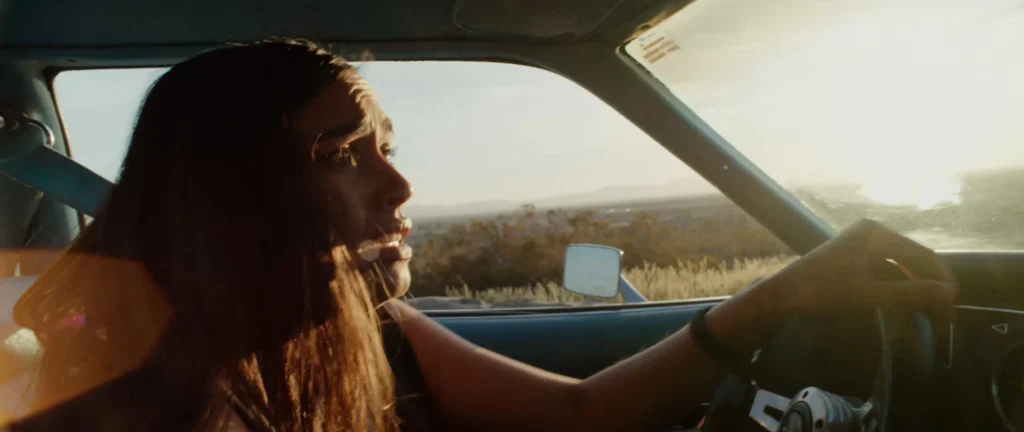
When we started making Blood Star, the focus was simple: how do you make a film that looks like it cost $2–3 million — without spending it? The answer wasn’t to chase scale, but to understand where scale actually comes from.
When you look at road trip movies, road trip horror movies and road trip thriller movies, a pattern becomes clear. These films don’t rely on budget to feel big. They rely on environment, movement and exposure. That’s where the solution presented itself — road trip movies give you immediate production value.
Table of Contents
WHY ROAD TRIP MOVIES ARE THE PERFECT LOW-BUDGET GENRE
The more we looked at it, the clearer it became. Some of the most enduring films sit within this space — road trip movies, road trip thrillers, road trip horror movies — and they all share the same core advantage: They turn location into production value.
A desert road doesn’t cost anything to write. But on screen, it gives you:
- scale
- isolation
- atmosphere
- cinematic scope
That’s the gap. A small film can suddenly feel big. And that’s why road trip movies have lasted.
ROAD TRIP MOVIES: WHERE ISOLATION BECOMES THREAT
At a structural level, road trip movies are built on movement. But what’s interesting — especially in road trip horror movies and road trip thriller movies — is that movement doesn’t create freedom. It creates exposure. The further you go:
- the further you are from help
- the more isolated you become
- the more vulnerable you are
That’s why films like The Texas Chain Saw Massacre, Wolf Creek, and The Hitcher work so well. They’re not just road trip movies. They’re controlled environments disguised as open space. And that contradiction is powerful.
A DESERT ROAD IS CINEMA
There’s also a purely visual reason why road trip movies work. A desert road, shot properly, is cinematic by default. It gives you:
- long horizons
- harsh light
- empty space
- natural contrast
You don’t need to build sets. You don’t need to dress locations heavily. The world is already doing the work. That was the realisation for us on Blood Star.
If we couldn’t afford scale, we could frame scale. If we couldn’t build spectacle, we could find it. And a road cutting through the desert gives you that immediately.
ROAD TRIP HORROR MOVIES AND THE POWER OF THE FRAME
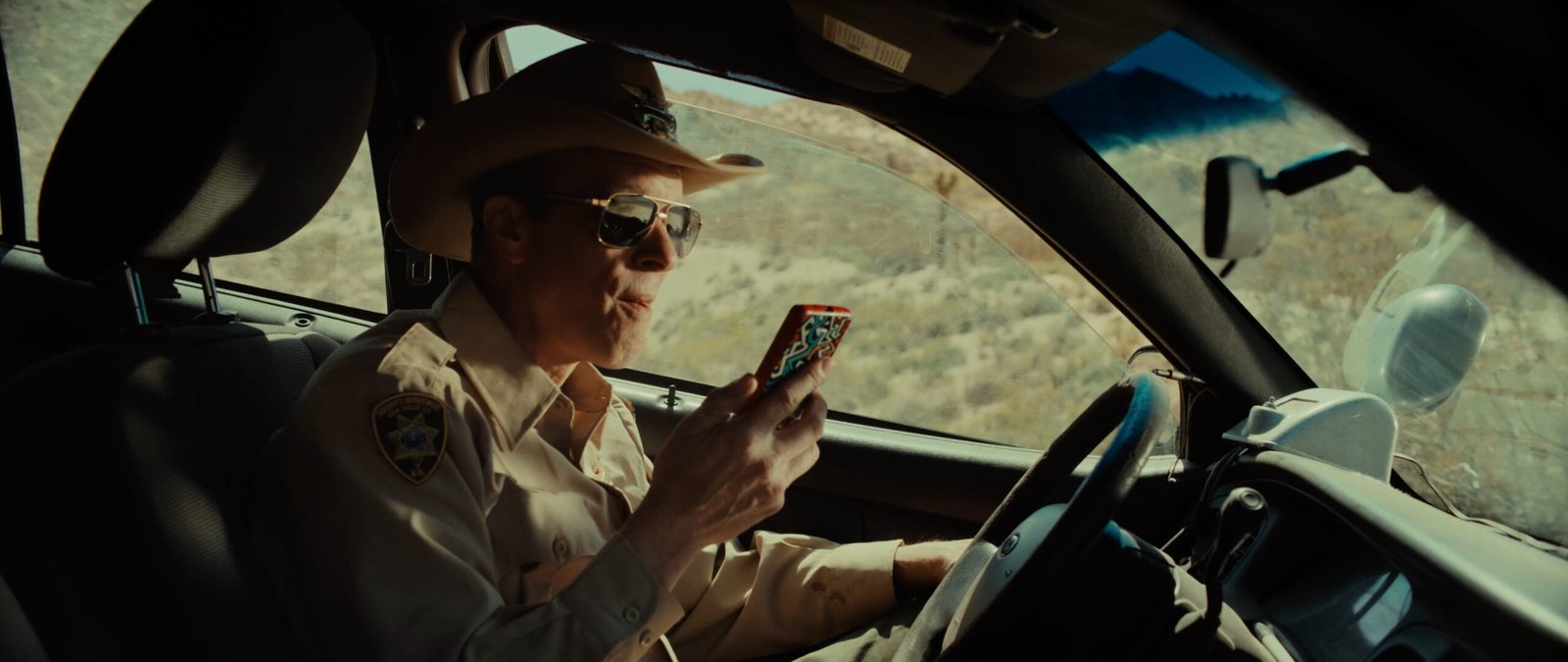
Framing is what separates a road that merely looks empty from one that feels threatening. Put the camera low and let the horizon sit high in the frame and the vehicle becomes small while the landscape becomes vast. Hold a wide shot longer than is comfortable and open space turns into exposure — there is nowhere to hide and nothing to cut away to. A rear-view mirror, or a long lens compressing the road behind a character, does the same work in reverse, collapsing the distance between the pursued and the pursuer. None of this costs money. It is a decision about where the camera goes and how long the shot is held.
FINDING THE SWEET SPOT: STORY + CHARACTER + VISUALS
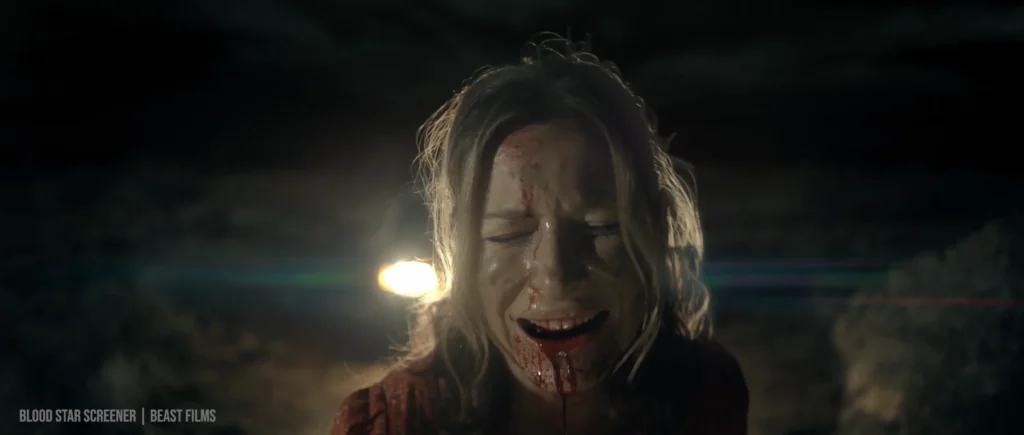
The lineage was unmistakable:
- The Texas Chainsaw Massacre — daylight terror & moral rot
- Duel — pursuit stripped to its essence
- The Hitcher — nihilism on open roads
- No Country for Old Men — violence without explanation
- Blood Simple — consequence over spectacle
- Death Proof — control, tension, inevitability
The challenge wasn’t just finding production value. It was finding the balance. We kept asking:
- how do we tell a compelling story?
- how do we build characters people engage with?
- how do we make it visually cinematic without money?
The answer was to let the genre do part of the work. Road trip movies naturally generate narrative. You have a journey, a destination, and obstacles along the way. You don’t need to force structure — it’s already there.
And when you combine that with road trip horror or road trip thriller mechanics, the stakes escalate naturally. Each mile increases pressure. Each stop becomes a potential threat.
Frequently Asked Questions About Road Trip Movies
Before committing to production, we tested the idea mercilessly.
We asked:
What defines a road trip movie?
Why are road trip movies suited to low budgets?
What are the classic road trip horror and thriller films?
Is Blood Star a road trip movie?
How do you make a road trip movie with no money?
FINAL THOUGHT: HOW TO MAKE A ROAD TRIP MOVIE WITH NO MONEY
If you don’t have budget, stop thinking in terms of what you can’t do and start thinking about what the genre gives you for free. That’s the real advantage of road trip movies. They give you scale without building it. They give you movement without complexity. They give you production value simply through geography.
A desert road, framed correctly, already feels cinematic. It already carries tone. It already suggests isolation and danger. That’s why road trip horror movies and road trip thriller movies work so consistently. The environment does half the storytelling. The distance creates tension. The exposure creates vulnerability.
For us, that was the shift on Blood Star. Instead of trying to expand the film artificially, we leaned into the road trip movie structure and let it define everything — pacing, character, tension and visual language.
Because in the end, making a road trip movie with no money isn’t about reducing ambition. It’s about placing it in the right environment. And if you get that right, the film doesn’t feel small. It feels like cinema.
More on how this played out in practice: the Blood Star feature film case study breaks down the ten-day shoot, and our survival horror movies guide covers the genre rules distributors actually buy against. If you are planning a narrative shoot, see film and TV production.