
Blood Star Case Study
How Beast Films Created a Hidden Gem Psychological Road Thriller
Blood Star (2024) is a psychological road thriller directed by Lawrence Jacomelli and produced by Beast Films. Positioned between slow-burn horror, survival thriller and desert noir cinema, the film was designed by Beast Films as a cinematic independent feature built around realism, atmosphere and escalating psychological pressure.
Set against the vast isolation of The Desert, Blood Star follows a young woman trapped in a deadly cat-and-mouse game with a corrupt sheriff whose authority becomes increasingly terrifying the more isolated the environment becomes. Rather than relying on supernatural mythology or conventional jump scares, Beast Films approached the movie as a grounded survival thriller driven by realism, visual tension and emotional exhaustion.
The project has increasingly found audiences searching for:
- indie horror thrillers
- hidden gem psychological thrillers
- atmospheric horror films
- road trip horror movies
- desert noir cinema
- tense survival thrillers
- slow-burn horror movies
- cinematic indie horror
- and modern cult thrillers
Results: From Microbudget Thriller to International Distribution
One of Beast Films’ biggest achievements with Blood Star was proving that a tightly controlled independent production could compete visually and commercially far above its budget level.
Shot in just ten days with extremely limited resources, Beast Films created a cinematic thriller that audiences and industry viewers frequently compared to studio-backed productions and multi-million-dollar indie films. The film’s controlled cinematography, desert landscapes and disciplined filmmaking approach created the impression of a production made for significantly more money.
That became one of the project’s defining industry talking points.
Blood Star secured festival premieres at prestigious genre and independent film festivals including the Neuchâtel International Fantastic Film Festival and Cinequest Film & Creativity Festival, helping position the film as serious independent genre cinema rather than disposable streaming horror, helping position the film as serious independent genre cinema rather than disposable streaming horror. The festival exposure also helped attract international distribution attention and validate the project’s commercial potential.
The film ultimately secured distribution through Plaion and Quiver and was released across major global platforms including:
- Amazon Prime Video
- Apple TV
- Google Play
- YouTube Movies
For a lean independent psychological thriller made outside the studio system, achieving this level of distribution represented a significant commercial outcome.
More importantly, Blood Star became proof of concept for Beast Films’ feature strategy: combining commercial-level production discipline with cinematic genre storytelling to create films capable of competing internationally on limited budgets.
The success of the film directly contributed to the company moving into development and financing discussions on its next feature project, now targeting the $1.5–2 million budget range.
Blood Star demonstrated that strong visual identity, disciplined execution and filmmaker-led production methods can allow independent cinema to perform far beyond its scale.
Psychological Road Thriller Meets Desert Noir Cinema
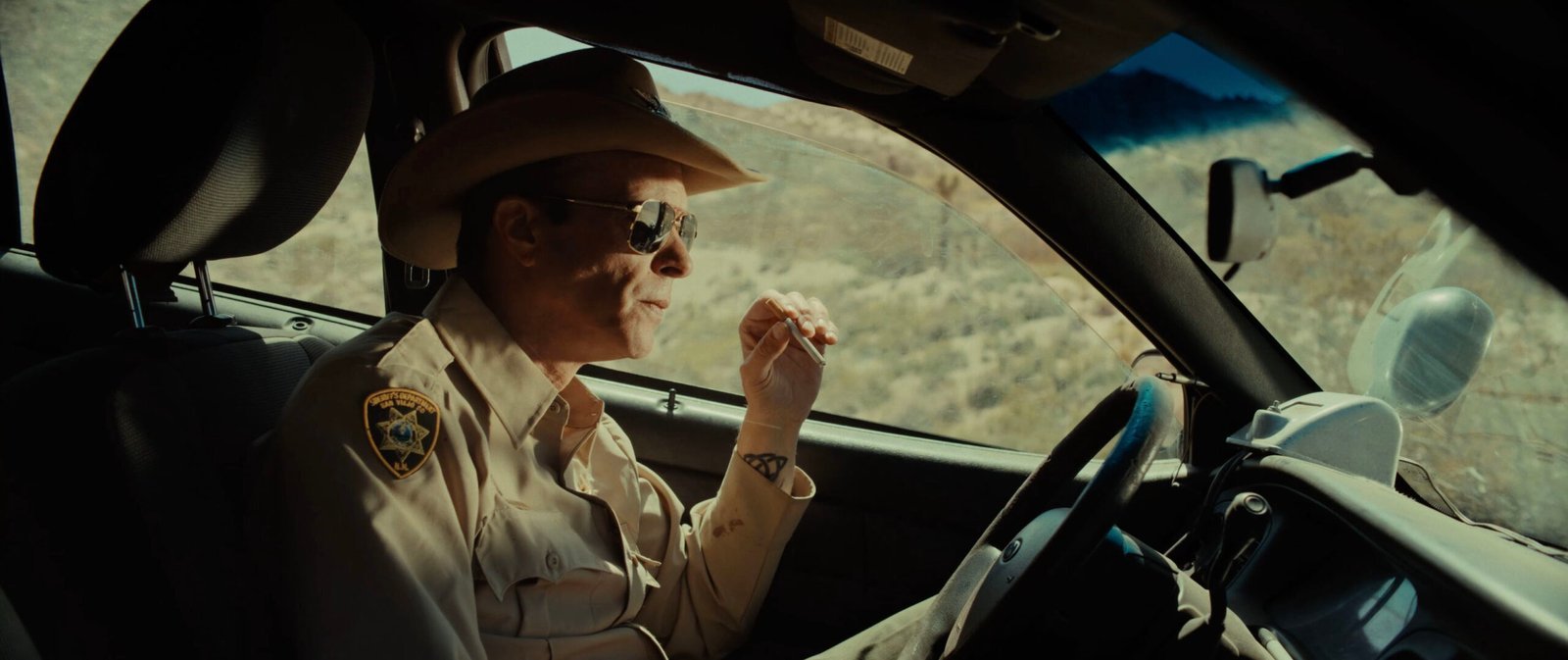
Blood Star was conceived by Beast Films as a stripped-back survival thriller inspired by the relentless tension of classic road-paranoia films. The filmmakers wanted the movie to feel grounded, dangerous and psychologically oppressive rather than sensationalised or stylised beyond reality.
The creative ambition was to combine:
- the road danger of Duel
- the bleak, sun-bleached atmosphere of No Country for Old Men
- the survival horror energy of Wolf Creek
- and the tension-driven realism of Breakdown
while maintaining the emotional intimacy associated with arthouse psychological thrillers.
The result is a film that audiences frequently describe as:
- oppressive
- exhausting
- suspenseful
- atmospheric
- gritty
- and relentlessly tense
rather than conventionally “scary.”
How Blood Star Uses The Desert as Psychological Horror
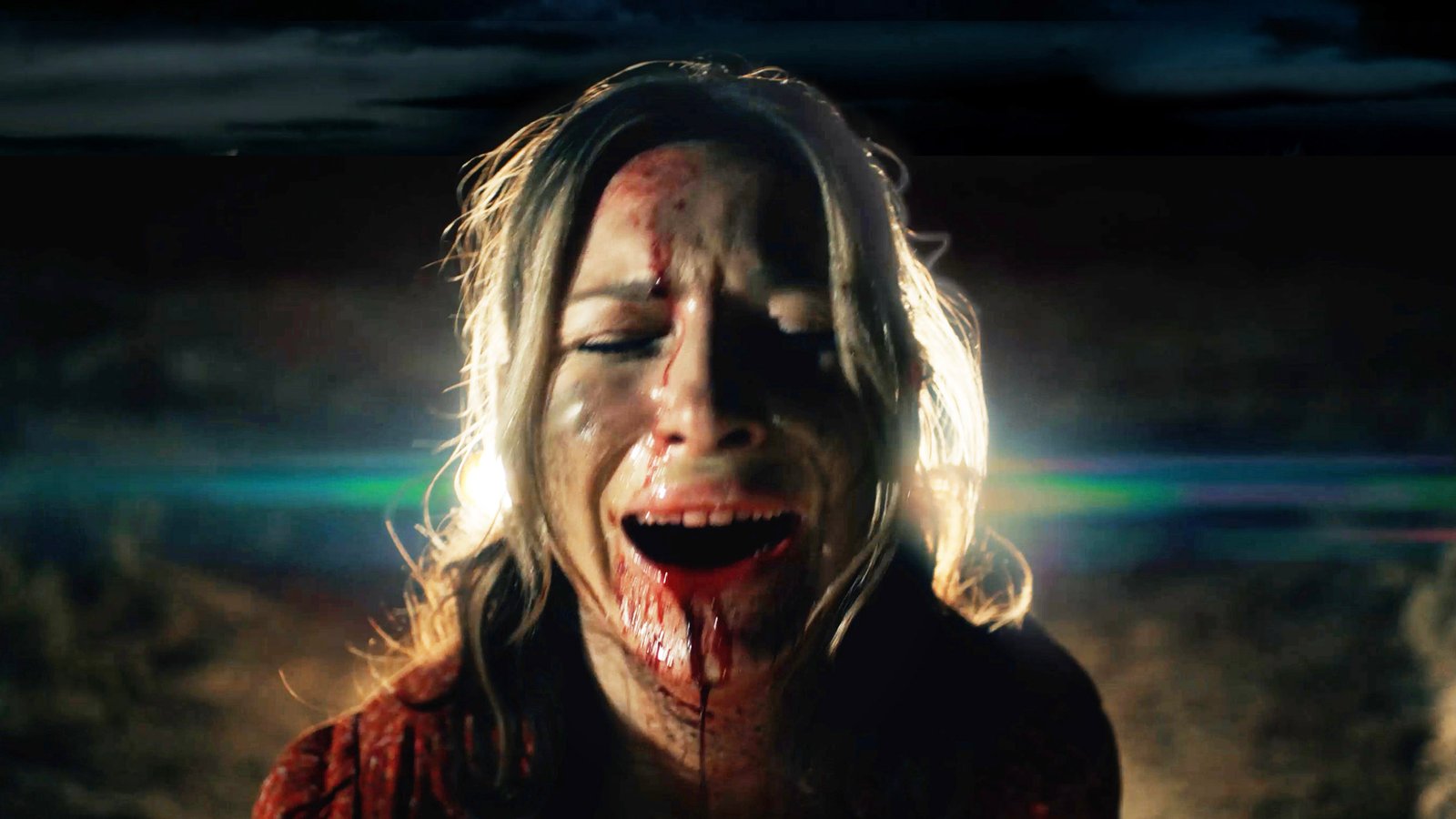
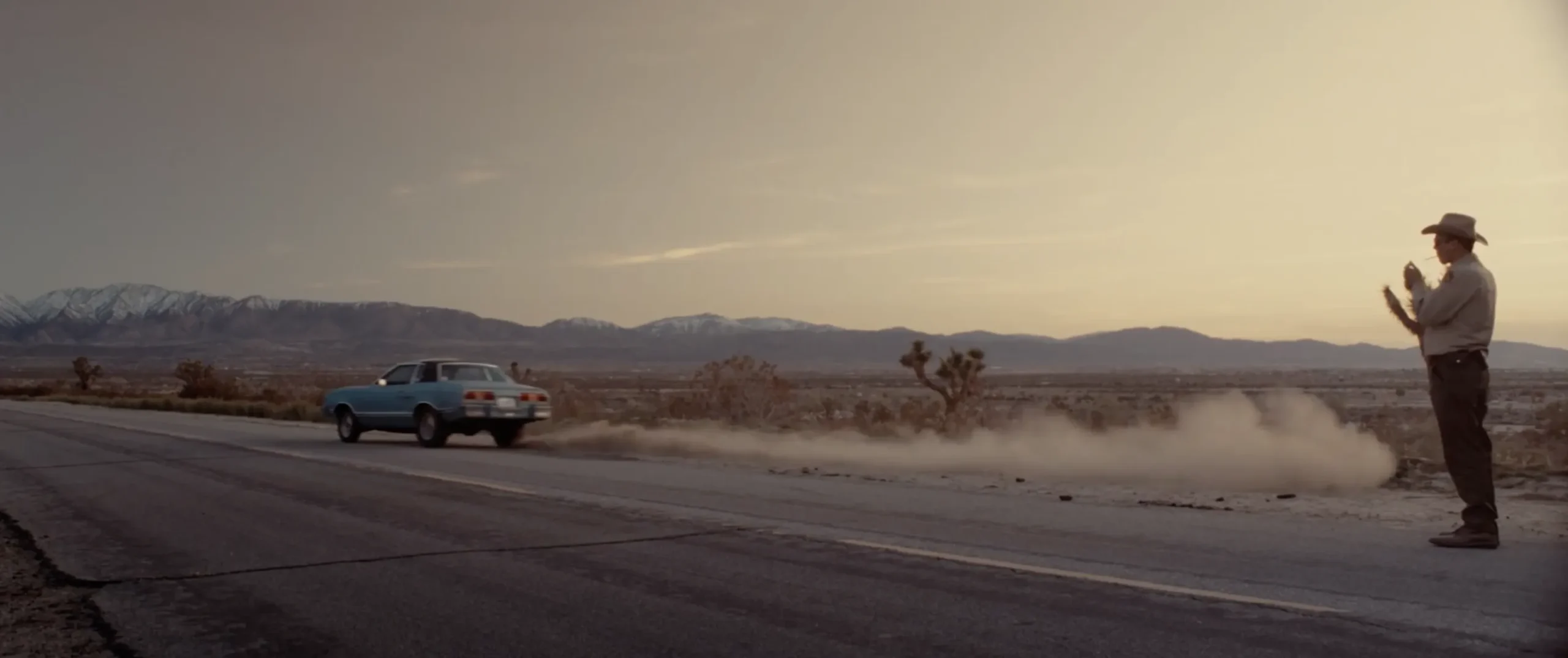
One of the defining elements of Blood Star is the way Beast Films and director Lawrence Jacomelli transformed The Desert into part of the horror itself. Empty roads, roadside diners, gas stations and endless stretches of darkness create a constant feeling of exposure and vulnerability.
Rather than treating the desert as simple scenery, Beast Films used the environment as a psychological weapon.
The vast emptiness surrounding the characters creates:
- isolation
- paranoia
- emotional fatigue
- and a feeling that escape is impossible
This approach places Blood Star within the cinematic lineage of:
- desert noir
- highway horror
- desert thrillers
- and neo-noir survival cinema.
Audiences searching for:
- desert road thrillers
- isolated highway horror
- slow-dread road films
- and road survival movies
have increasingly connected with the film’s atmosphere-driven approach to suspense.
The Making of Blood Star: Shooting an Indie Thriller in 10 Days
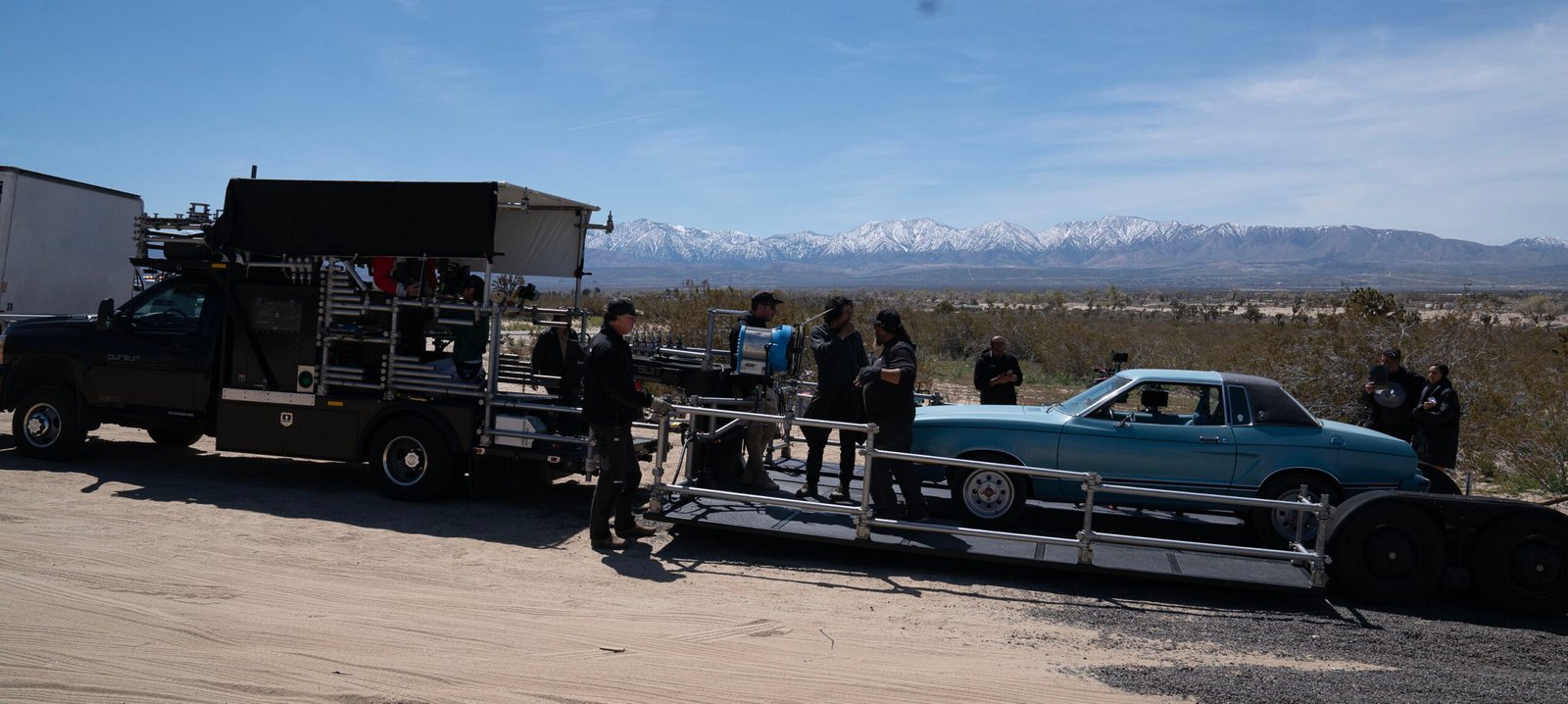
Blood Star was produced by Beast Films and shot by director Lawrence Jacomelli and Cinematographer Pascal Combes-Knoke, in just ten days in The Desert under extremely demanding production conditions. Rather than trying to artificially inflate scale through excessive locations or visual effects, the company focused on:
- visual discipline
- efficient scheduling
- practical locations
- and cinematic tension construction.
Most of the production was concentrated around tightly controlled desert locations in The Desert. This allowed the crew to move quickly while maintaining continuity and atmosphere.
The production frequently relied on:
- multi-camera setups
- minimal relighting
- practical lighting
- and rapid resets to preserve momentum.
This lean filmmaking methodology became central to Blood Star’s visual identity and helped Beast Films achieve a level of cinematic polish rarely associated with low-budget survival thrillers.
Commercial Filmmaking Techniques Applied to Independent Cinema
Before transitioning into feature filmmaking, Beast Films built its reputation producing commercials and branded content for companies including:
- Burger King
- IKEA
- Apple
- British Airways
That commercial filmmaking background heavily influenced Beast Film’s production strategy.
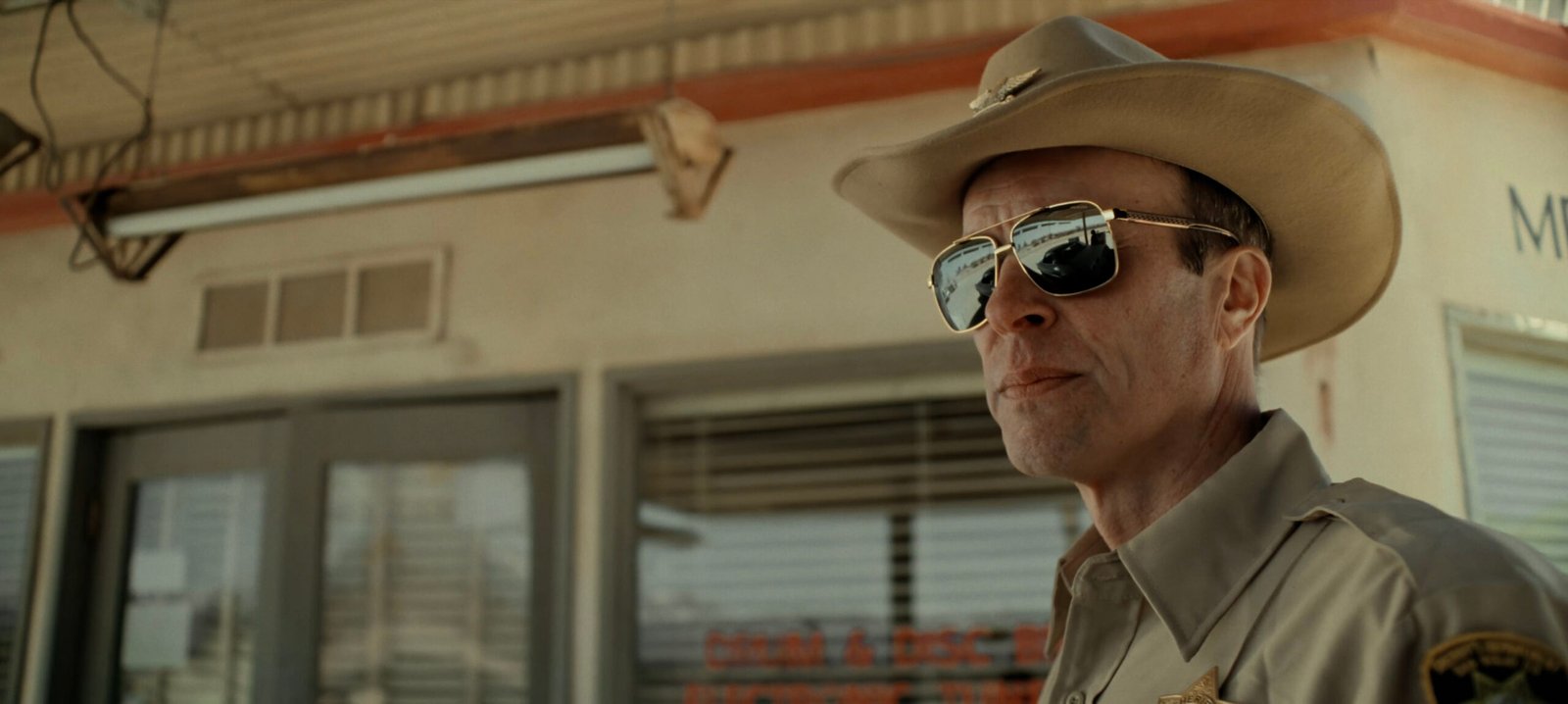
Unlike many independent productions that rely on loose improvisation, Blood Star was:
- storyboarded in full
- previsualised extensively
- and assembled into an animatic before shooting began.
This commercial production discipline allowed the filmmakers to maximise production value while maintaining visual consistency under severe time constraints.
The project has since become an example of how commercial filmmaking precision can be applied to independent genre cinema without sacrificing atmosphere or artistic identity.
Cinematic Horror Photography and Neo-Noir Visual Style
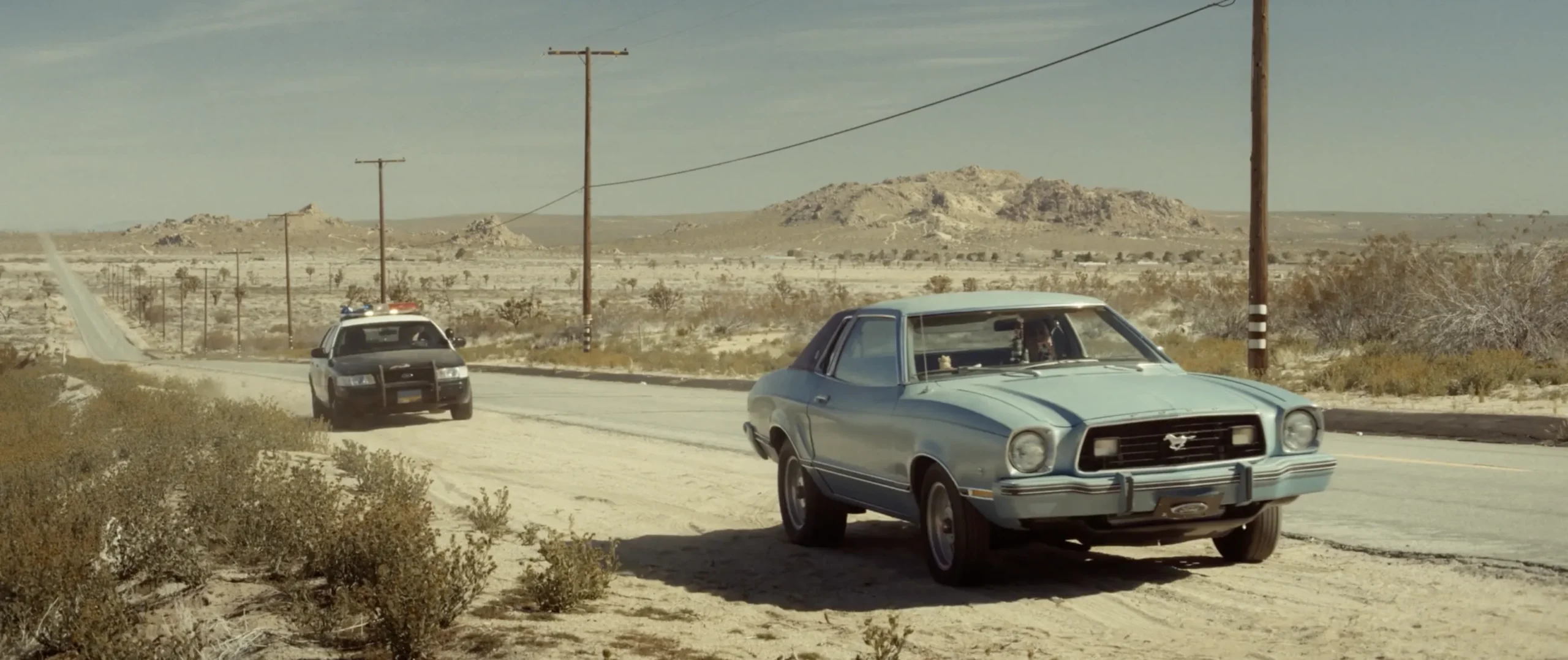
Blood Star’s cinematography has become one of the film’s strongest talking points among horror and thriller audiences.
Beast Films shot the movie primarily using RED Gemini cameras paired with Cooke S4/i lenses, allowing the filmmakers to embrace:
- darkness
- naturalistic lighting
- empty negative space
- and low-light desert photography.
Rather than over-lighting scenes, the production leaned into:
- shadow
- headlights
- sodium-vapour textures
- and practical lighting sources
to create a visual atmosphere closer to:
- 1970s paranoia thrillers
- neo-noir road movies
- and grounded survival horror cinema.
The result is a visually striking indie thriller that audiences frequently compare to films by:
- Steven Spielberg
- Joel and Ethan Coen
- John Carpenter
- and William Friedkin
for its atmosphere, realism and visual restraint.
The Mustang Accident That Changed Blood Star’s Visual Identity
One unexpected production problem ended up shaping the film’s visual mythology.
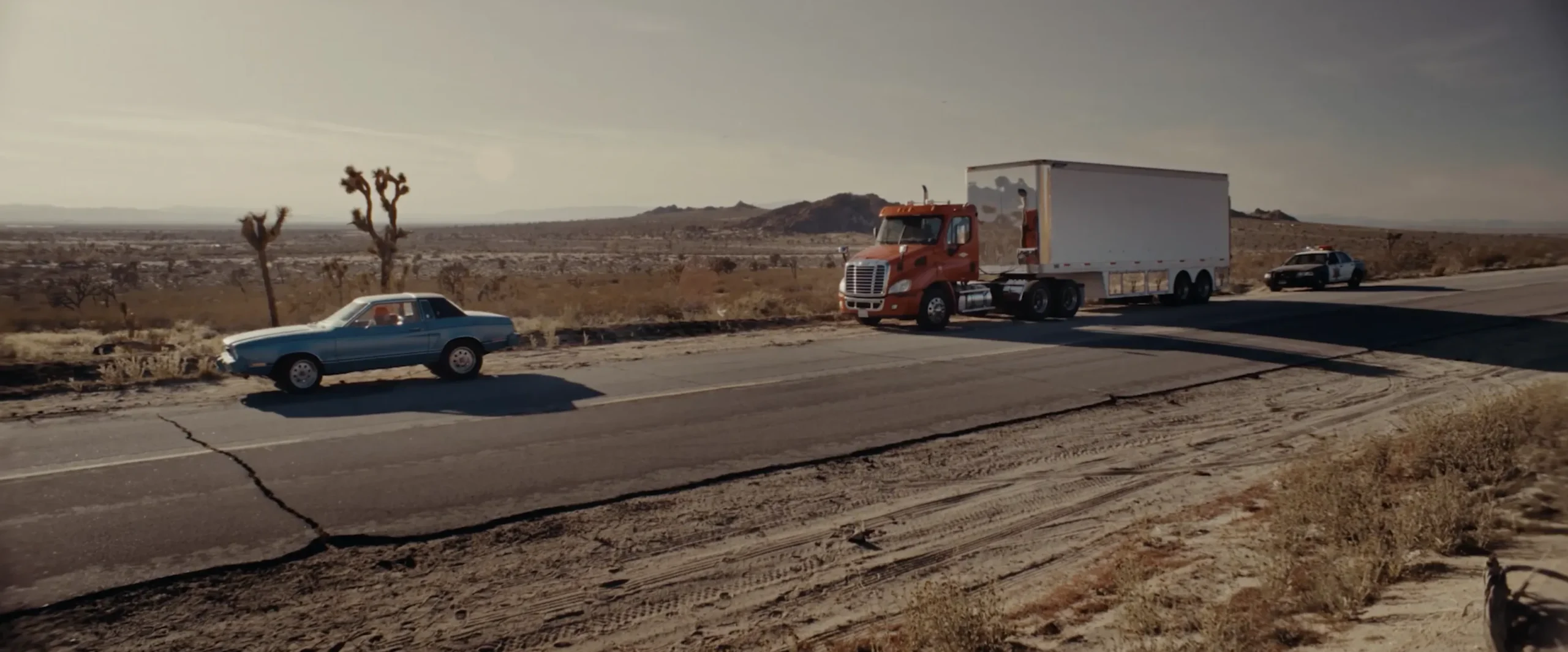
Shortly before filming began, the original hero vehicle suffered a transmission failure and had to be replaced with a 1977 Ford Mustang II Ghia V8.
The replacement dramatically altered the tone of the film. The ageing Mustang brought:
- a stronger desert-road texture
- a more threatening silhouette
- and a deeper neo-noir atmosphere
to the production.
The car ultimately became one of the movie’s defining visual elements and strengthened Blood Star’s identity as a modern road nightmare rooted in desert highway cinema.
Why Blood Star Appeals to Fans of Slow-Burn Psychological Horror
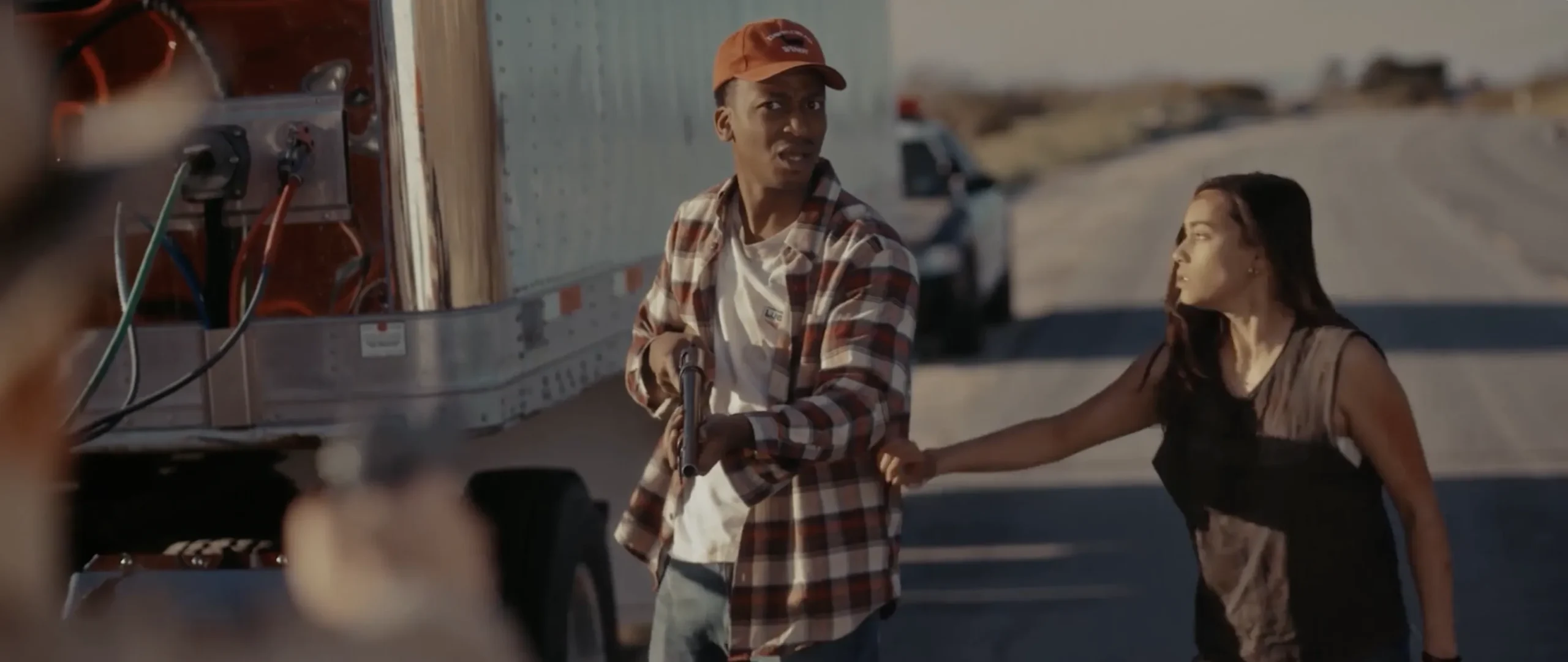
A major reason Blood Star resonates with horror cinephiles is its refusal to rely on cheap shock tactics or excessive exposition.
The film instead focuses on:
- emotional pressure
- psychological realism
- manipulation
- unpredictability
- and sustained dread.
Viewers frequently describe the movie as:
- anxiety-inducing
- emotionally exhausting
- relentlessly tense
- bleak
- and deeply atmospheric.
This has helped the film connect strongly with audiences searching for:
- slow-burn horror movies
- disturbing psychological thrillers
- atmospheric survival horror
- realistic horror films
- and tension-driven indie cinema.
The movie has also developed strong crossover appeal with viewers interested in:
- A24-style horror
- festival thrillers
- arthouse genre cinema
- and neo-noir survival films.
Festival Horror to Streaming Discovery: How Blood Star Built Word-of-Mouth
Rather than positioning itself as disposable streaming horror, Blood Star was developed and marketed as a cinematic festival genre film with strong visual identity and psychological tension.
As the film expanded onto platforms including:
- Amazon Prime Video
- Apple TV
- Google Play
- and YouTube Movies
it began developing momentum among:
- Letterboxd users
- horror communities
- Reddit recommendation threads
- and hidden gem thriller discussions.
The movie increasingly became associated with:
- underseen thrillers
- cult discovery cinema
- and modern atmospheric horror recommendations.
This organic recommendation culture has become one of the key drivers behind Blood Star’s growing reputation among thriller and horror audiences while simultaneously strengthening Beast Films’ profile as a filmmaker-led independent production company capable of delivering cinematic genre features with international appeal.
Blood Star and the Return of Atmospheric Road Horror Cinema
Blood Star positions itself within a cinematic tradition stretching from:
- Duel
- Badlands
- The Hitcher
- and The Texas Chain Saw Massacre
through to modern independent thrillers such as:
- Blue Ruin
- Deathproof
- Wolf Creek
- Green Room
- and It Follows.
At a time when many horror films rely heavily on jump scares and mythology-driven storytelling, Blood Star instead embraces:
- simplicity
- realism
- visual tension
- and sustained psychological pressure.
The film demonstrates how minimalist filmmaking, cinematic discipline and atmosphere-driven storytelling can still create deeply unsettling horror experiences without relying on spectacle.
For audiences searching for:
- hidden gem horror films
- tense psychological thrillers
- road survival horror
- desert noir cinema
- and cinematic indie thrillers
Blood Star has increasingly become recognised as one of the most atmospheric and psychologically oppressive independent genre films to emerge in recent years.