
Few cities have shaped the moving image the way London has. For a century it has been a place where filmmakers gather, where craft is passed down through generations of crews, and where the distance between a period drama and a national advertising campaign is a short drive across town. London video production carries that inheritance in everything it touches. The city is not simply a backdrop; it is an ecosystem, and it is one of the reasons work made here still travels convincingly to audiences in every market.
What makes a city a genuine home for premium filmmaking is rarely one thing. It is the accumulation of crews, studios, locations, heritage and a certain seriousness about the craft — all held in a space small enough that they feed one another. London has all of it, layered over decades.
A deep bench of crews
The single greatest asset any production city has is its people, and London’s are extraordinary. Directors of photography who have lit features work between commercials and drama. Gaffers, grips, focus pullers, colourists and sound designers move fluidly between the worlds of cinema and advertising, carrying the standards of one into the other. That crossover is why a thirty-second brand film shot in the city so often feels closer to the screen than to the feed.
This density matters in practical terms. A production can crew up a demanding shoot at short notice and know that every head of department has done it before, under pressure, to broadcast standard. Experience of that depth cannot be improvised. It is the quiet reason schedules hold and difficult days resolve.
Studios and a working infrastructure
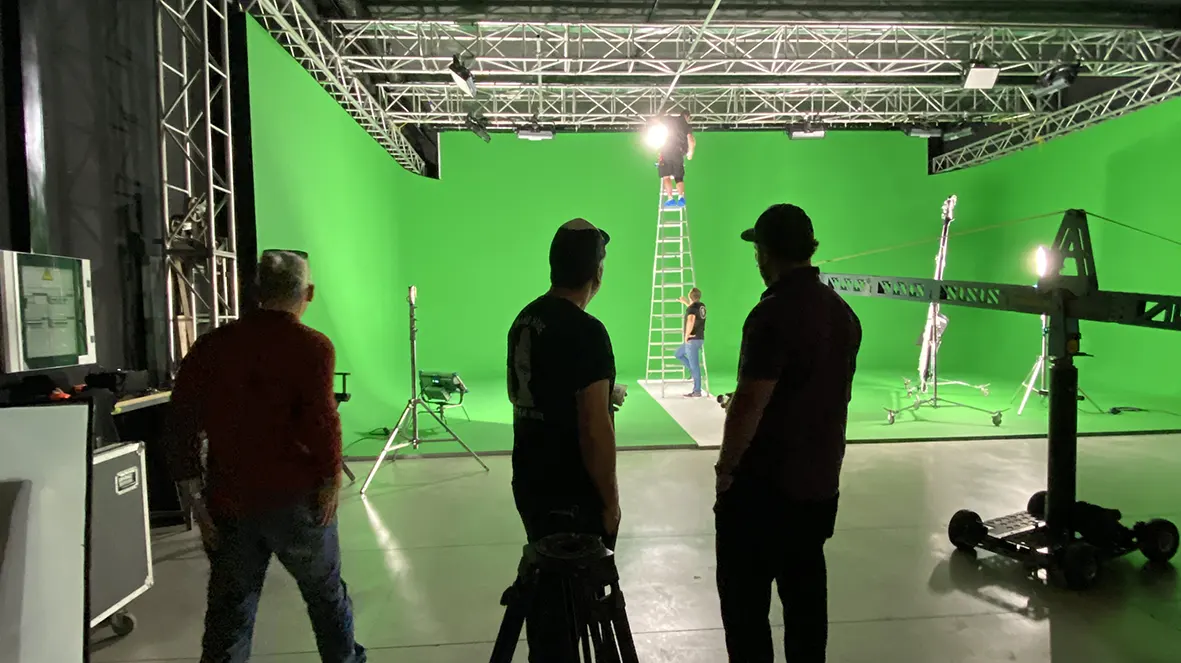
Around those crews sits an infrastructure built for scale. Pinewood, Shepperton, Elstree and a constellation of smaller stages give the region a studio capacity that rivals anywhere on earth, and the post houses, rental facilities, equipment suppliers and grading suites of Soho keep the whole chain within reach of one another. A film can be shot, edited, graded and mixed within a few square miles, by people who have worked together before.
That proximity changes how work gets made. Decisions happen in the room rather than across time zones. A director can walk from a shoot to a grade to a mix in an afternoon, holding the intention of the film intact through every stage. For premium work, where the final ten per cent is where the value lives, that continuity is decisive.
Locations that stand in for the world
London offers a range of looks that few cities can match. Georgian terraces, brutalist estates, glass towers, cobbled markets, river frontages and green squares sit within minutes of one another, and beyond the city the whole country opens up — coastline, moorland, castles, industrial heritage. A production can find a boardroom, a back street and a period interior in a single day, and if the brief calls for somewhere else entirely, the city has spent a hundred years learning to double for it.
That versatility is why international campaigns so often route through the capital. The logistics are understood, the permissions are navigable, and the visual vocabulary is broad enough to serve almost any story a brand wants to tell.
A heritage that raises the standard
Craft cities hold their makers to a higher bar, and London’s filmmaking heritage is a constant, useful pressure. The city gave the world some of its most celebrated cinema and, for decades, some of its most admired advertising. That history is not nostalgia. It sets an expectation — that a commercial can carry the weight of a short film, that a corporate piece can be genuinely moving, that the audience deserves more than competence.
It is an environment that suits filmmakers who think in those terms. Beast Films was founded in the city by Lawrence Jacomelli and Victoria Taylor precisely because London rewards that ambition, and the company’s Cannes Lions recognition reflects an industry that still measures itself against the best. A London video production company works within that lineage whether it means to or not; the good ones lean into it.
Where craft meets commerce
What sets London apart, finally, is the meeting of art and commerce without either diminishing the other. The city has always understood that a brand film and a piece of cinema draw on the same disciplines — restraint, pacing, an emotional through-line — and it has built an industry that treats commercial work with real filmmaking seriousness. A great deal of the world’s most ambitious television commercial and brand campaign production is drawn here for exactly that reason.
Brands come to London not because it is convenient, though it often is, but because the work made here holds up. It stands beside cinema without embarrassment, it carries to audiences who owe it no attention, and it is made by people who take the craft as seriously as the client takes the outcome. That is what a home for premium video production actually means — not a single studio or a famous street, but a whole city that has decided, over a very long time, that the moving image is worth doing properly.