Artificial intelligence has crossed a critical threshold in advertising.
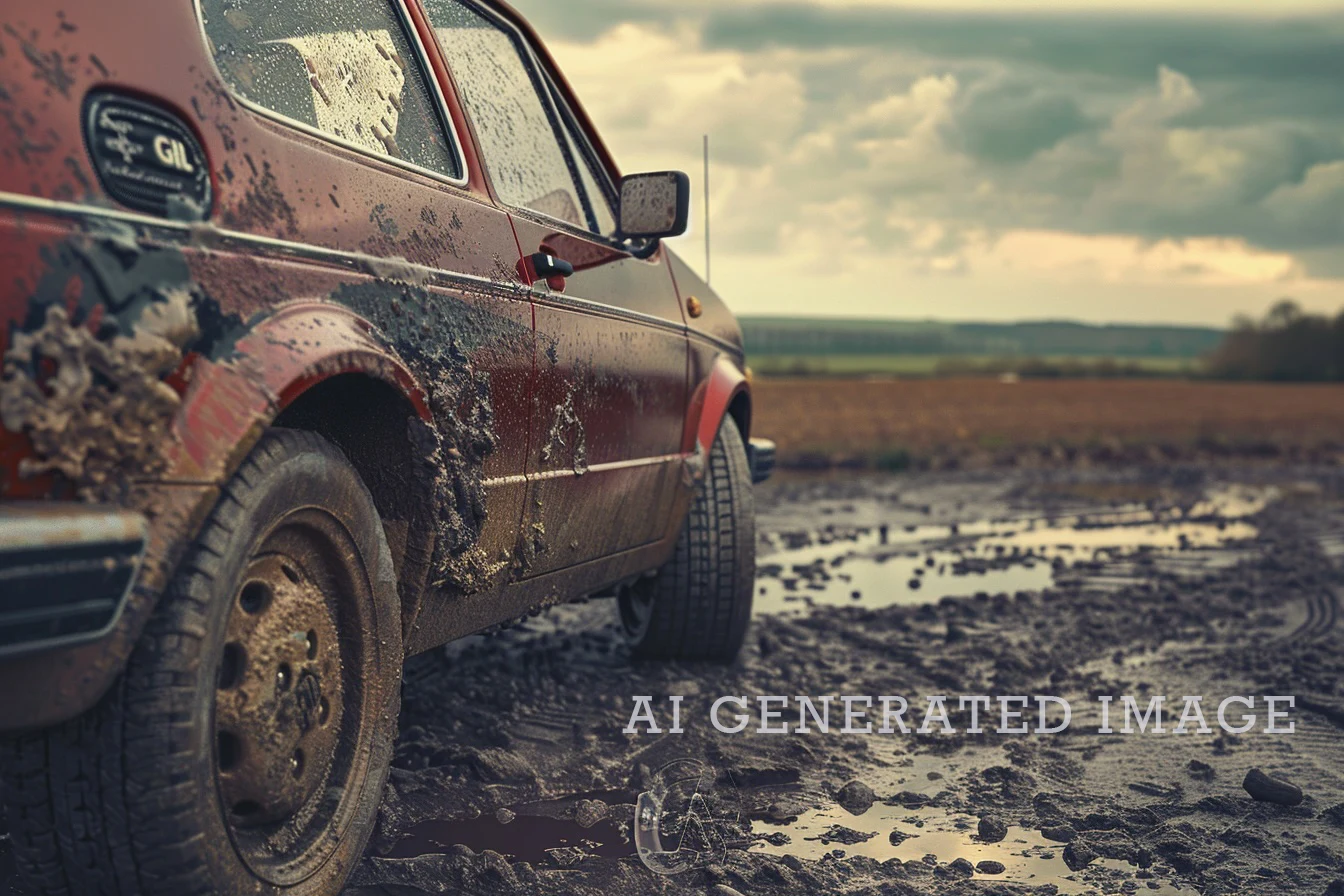
The problem is no longer that AI-generated images and videos look fake. The problem is that AI advertising now looks better than reality — more perfect, more persuasive, and increasingly indistinguishable from real photography and film.
In UK commercial advertising, this shift raises serious questions about consumer trust, truthful marketing, and the future of the creative industries. Without clear regulation and mandatory AI disclosure, AI-generated advertising imagery risks becoming fundamentally misleading, even when no explicit false claims are made.
This is why the UK urgently needs clear, enforceable rules requiring the labelling of AI-generated images and AI-generated video used in advertising.
AI Has Changed Advertising Faster Than Regulation: How AI Video Production Services Are Redefining Visual Truth
AI-generated content has moved rapidly from novelty to mainstream advertising tool. AI video production services now allow brands to create hyper-realistic visuals without a camera, a product, a studio, or a physical shoot. Entire advertising campaigns can be generated synthetically — optimised for attention, speed, and scale rather than accuracy or real-world reference.
UK advertising standards were built on the assumption that images, however stylised, were still anchored to something real: a photographed object, a filmed performance, a physical space. The rise of AI video production services disrupts that assumption entirely.
When advertising imagery no longer requires a real-world reference point, consumers lose the context needed to make informed decisions. This is not simply a creative issue or a technological shift — it is a consumer protection issue, one that existing regulation was never designed to address.
The End of Visual Truth in Commercial Advertising — and the Rise of AI Video Advertising
For decades, advertising has operated under an implicit agreement with audiences. Images could be enhanced, retouched, or art-directed, but they ultimately represented something that existed.
AI-generated advertising breaks that agreement.
AI visuals are not constrained by physics, manufacturing limits, biology, or logistics. Through ai video advertising, brands can depict products with impossible proportions, unrealistic textures, and idealised perfection that no real-world process can achieve. Entire scenes, performances, and environments can now be fabricated without a camera ever rolling.
When AI-generated imagery is presented without disclosure, viewers reasonably assume they are seeing a photographed or filmed product. In reality, they may be seeing a synthetic simulation created through ai video production services, optimised purely for persuasion rather than accuracy.
At that point, ai video advertising stops being representational and becomes speculative — and consumers lose the context needed to judge what is real, what is achievable, and what is being promised.
AI Food Advertising: The Clearest Case of Consumer Deception
Food advertising highlights this problem more clearly than almost any other category.
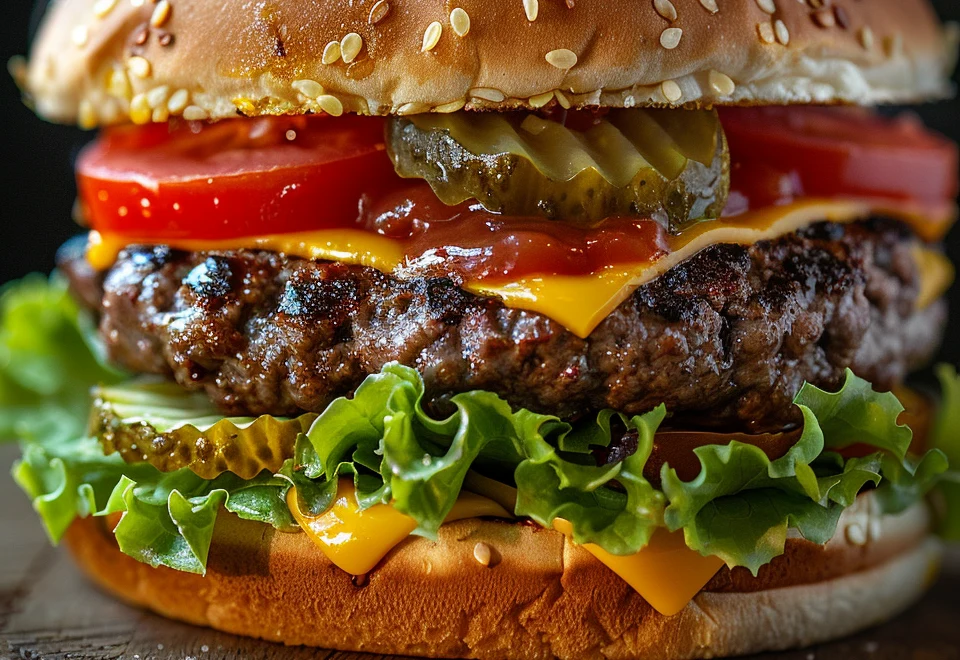
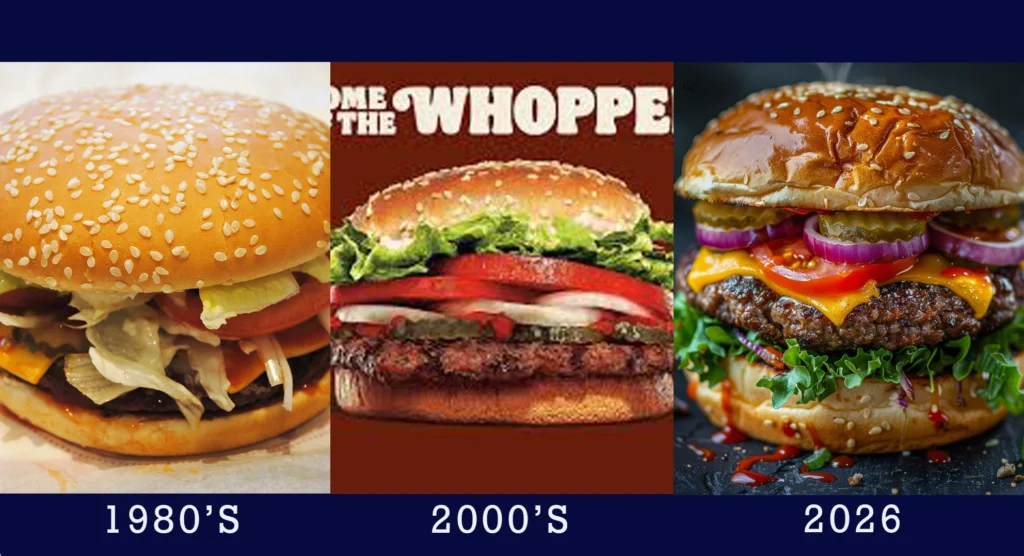
AI-generated burgers, pizzas and desserts can appear juicier, fresher and more structurally perfect than anything that could be cooked, assembled or served. These images are not food styling; they are fictional constructs.
Consumers reasonably expect food advertising images to represent a real product that can be purchased and eaten as shown. When AI-generated food images are used without clear labelling, they create misleading expectations, even if accompanying copy is technically accurate.
Under UK consumer protection law, this undermines informed purchasing decisions, weakens trust in advertising standards, and creates unfair competition between brands using real photography and those using synthetic imagery.
When AI Is “Better Than Reality,” Competition Breaks— and the Future of Video Production Changes
Unregulated AI video advertising creates perverse incentives — and poses a serious risk to the future of video production.
When one brand adopts AI-generated perfection, competitors are effectively forced to follow. Real photography and filmmaking are penalised for being slower, messier, and constrained by reality. Authentic representation becomes commercially unviable — not because it lacks value, but because it cannot compete with synthetic imagery optimised purely for persuasion.
This accelerates a race where reality itself loses ground. Trust erodes. Consumers are conditioned to expect products and experiences that cannot exist. And once this becomes normalised, truthful representation stops being competitive at all. In that environment, the future of video production shifts away from craft, accountability, and reference — and towards simulation without context.
At that point, the problem is no longer creative. It’s systemic.
Transparency Is Not a Ban — It’s a Safeguard for AI Video Advertising
Requiring a simple disclosure such as:
“AI-generated image” or “AI-generated video”
does not restrict creativity, innovation, or the legitimate use of AI video production services.
What it does is restore balance.
Transparency preserves consumer autonomy by giving audiences the context they need to interpret what they’re seeing. It restores meaning to visual claims in advertising. It allows AI video advertising to exist responsibly — alongside traditional production — rather than quietly replacing it. And it aligns directly with long-standing UK advertising principles of honesty, fairness, and non-misleading representation.
This is not anti-AI policy.
It is pro-transparency.
Pro-consumer.
And essential to preserving trust — and credibility — in the future of video production.
Protecting Jobs in the UK Creative Industries
The UK’s film, television, photography, advertising, and creative sectors employ millions of people and contribute billions to the economy.
Unchecked AI advertising threatens:
- Photographers
- Film crews
- Stylists
- Actors
- Set designers
- Editors
- Production companies
When AI-generated visuals can replace entire productions without disclosure, it devalues skilled labour and collapses ethical competition.
Clear labelling does not stop AI use — but it prevents silent replacement and allows clients and consumers to make informed choices about authenticity.
Why Existing UK Advertising Law Is No Longer Enough
The UK’s advertising framework was not designed for:
- Synthetic humans
- Entirely fabricated products
- Hyper-real visuals with no physical reference
Without explicit AI disclosure rules, enforcement bodies such as the ASA are forced to interpret outdated standards in a new technological reality.
That gap must be closed — now, not after trust has already collapsed.
A Call for a UK Parliament Petition on AI Advertising Disclosure
To safeguard consumers, creativity, and truth in advertising, the UK should introduce legislation requiring that:
Any AI-generated image or video used for commercial advertising purposes must be clearly and prominently labelled as AI-generated.
This should apply across:
- Food and drink advertising
- Consumer products
- Fashion and beauty
- Travel and lifestyle promotions
- Digital, print, and broadcast media
Such legislation would:
- Strengthen consumer protection
- Preserve honest competition
- Support creative employment
- Future-proof UK advertising standards
Conclusion: Why Transparency in AI-Generated Advertising Is Essential for Consumer Trust
When AI is better than reality, seeing is no longer believing.
In that world, transparency is not optional — it is infrastructure. As AI video advertising becomes more pervasive and AI video production services continue to accelerate across the industry, the context behind what audiences are shown matters more than ever.
If we want a future of video production where consumers can trust what they see, where creativity is rewarded, and where innovation does not come at the cost of honesty, then AI-generated advertising must be clearly and consistently disclosed.
The technology is moving fast.
The rules need to move faster.