A Genre Film Built for Fans of Serial Killer Movies, Road Trip Thrillers and Survival Horror
From the outset, we made a deliberate decision to create a genre-first film: a serial killer movie, a road trip movie, and a survival horror movie rolled into one. These aren’t obscure niches — they are some of the most actively watched, searched, and shared categories in cinema. People seek out survival thriller movies, serial killer horror thriller movies, and road trip thrillers because they promise momentum, danger, and excitement.
Blood Star was designed to sit naturally inside those expectations while still surprising the audience. In that sense, it operates as a true serial killer road trip movie, where movement isn’t escape but exposure — every mile travelled narrowing the character’s options rather than expanding them.
After developing more than a hundred potential ideas, one concept kept returning — not because it was easy to make, but because it answered the most important question an independent filmmaker making a horror thriller can ask:
Table of Contents
What kind of movie is it — and is this a film an audience actually wants to watch?
The answer was clear:
A serial killer movie.
A road trip thriller movie.
A survival horror movie.
Blood Star sits at the intersection of all three — and crucially, it treats them seriously. Not as nostalgia. Not as pastiche. But as living genres that still have the power to scare, disturb, and grip modern audiences.
This article isn’t about telling you how good the film is. It’s about explaining why we chose this story, why we believed it could reach a wide audience, and why we were willing to risk everything to make it.
Blood Star stars Britni Camacho and John Schwab (The Queens Gambit and Jack Ryan), whose performances anchor the film’s tension and psychological weight. The film is driven by character, proximity, and sustained pressure rather than spectacle — placing performance at the centre of the experience.
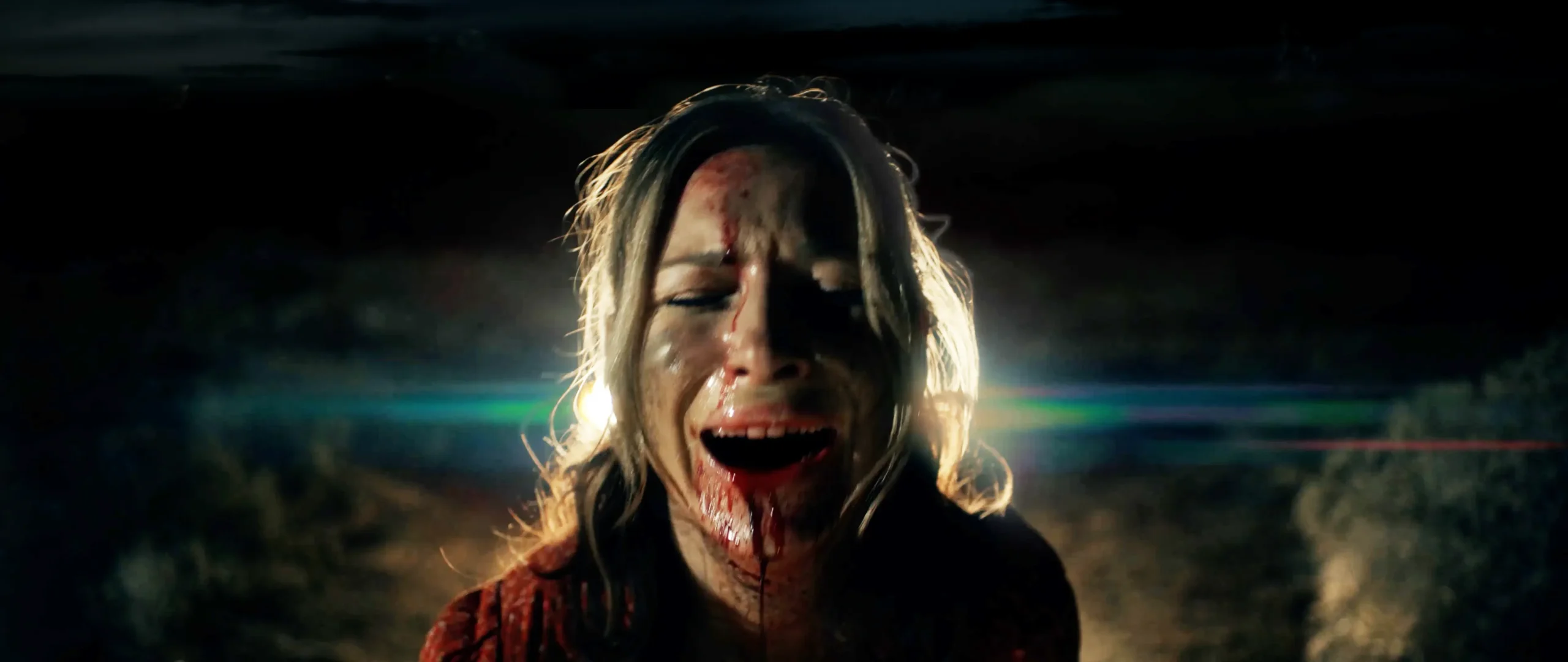
Logline: A young woman’s desert road trip turns into a relentless fight for survival when she becomes the target of a sadistic serial killer — forcing her to stay one step ahead on an open highway with nowhere to hide.
The film has screened internationally and has been highlighted by outlets including MovieMaker Magazine.
Why a Serial Killer Movie Was the Right First Feature
The starting point for Blood Star was not theme or tone — it was clarity.
The most successful independent films, especially debut features, tend to answer one fundamental question immediately: What is it? If a film can’t be described cleanly, it struggles to survive in the real world — with audiences, festivals, distributors, and press alike.
Blood Star answered without hesitation.
It is a serial killer movie built around a single, relentless threat — and more specifically, a psychological serial killer movie where fear comes from proximity, endurance, and moral unease raher than puzzle-solving.
Audiences don’t come to the best serial killer movies of all time for clever twists alone. They come for dread, pressure, and the slow realisation that there may be no authority, logic, or fairness left to appeal to.
The lineage of great serial killer horror thriller movies — from The Texas Chainsaw Massacre to Henry: Portrait of a Serial Killer — understands that fear doesn’t come from knowing less, but from knowing enough. From being trapped in proximity to something deeply wrong.
That’s the territory Blood Star occupies: a crime horror thriller movie where the danger is present, persistent, and inescapable.
The Road Trip Movie as a Trap, Not Freedom
At the same time, Blood Star is unmistakably a road trip movie — though not the romantic kind.
Classic road trip movies often promise escape, reinvention, or discovery. But the darker lineage of the genre — the lineage we were drawn to — subverts that promise entirely. In films like Duel, The Hitcher, and No Country for Old Men, the road becomes a narrowing corridor. Every mile travelled removes safety rather than providing it.
These are among the best road trip movies precisely because movement doesn’t equal progress. It equals exposure.
In Blood Star, the open highway is not freedom — it’s vulnerability. There are no crowds, no institutions, no witnesses. The road strips the protagonist down to instinct and endurance. This is where the road trip movie fuses naturally with survival thriller movies with a killer — motion becomes the mechanism of danger.
The car, the road, the landscape — they don’t rescue the character. They test her.
Survival Horror Movie: Fear Built on Pressure, Not Spectacle
Blood Star is a survival horror movie rooted in pressure rather than gore.
The fear doesn’t come from shock alone, but from accumulation — from staying in the situation long enough for dread to seep in. This places the film firmly in the tradition of a psychological survival horror film, where restraint and tension do more work than spectacle ever could.
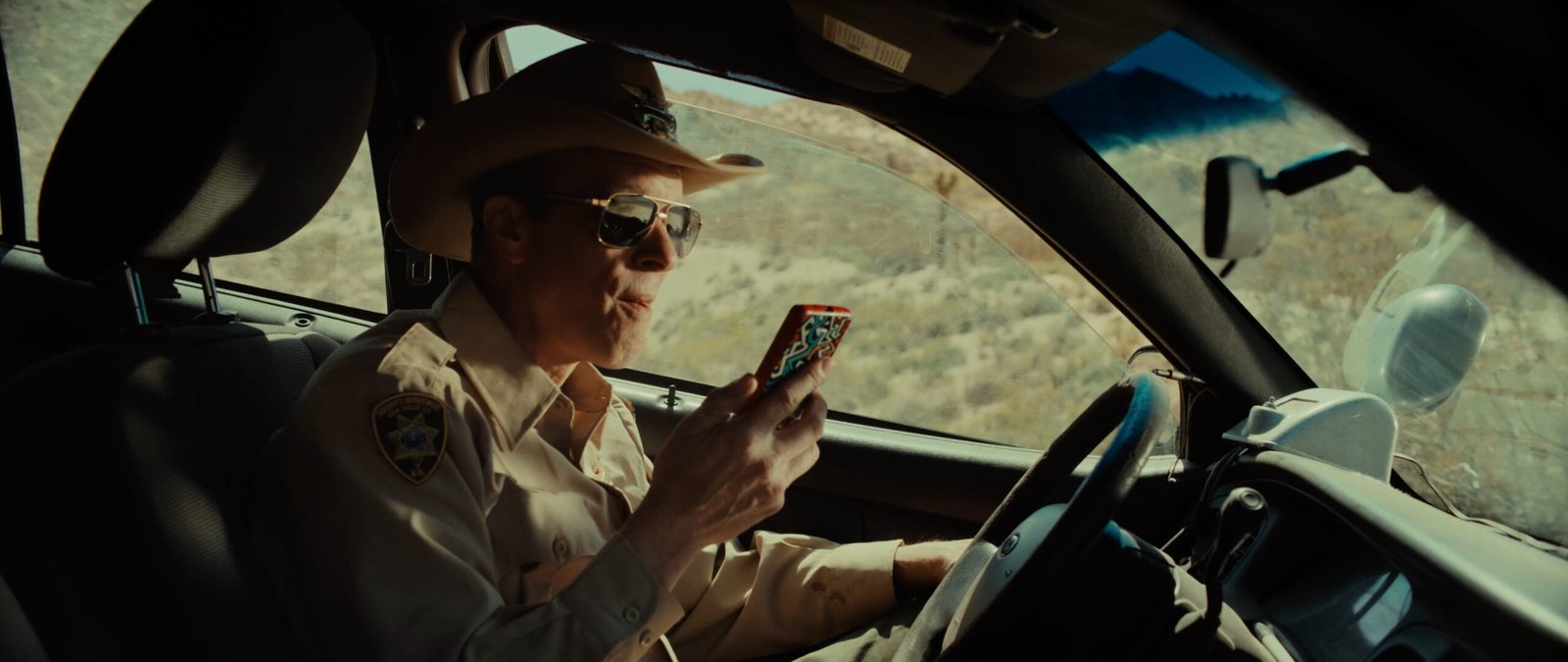
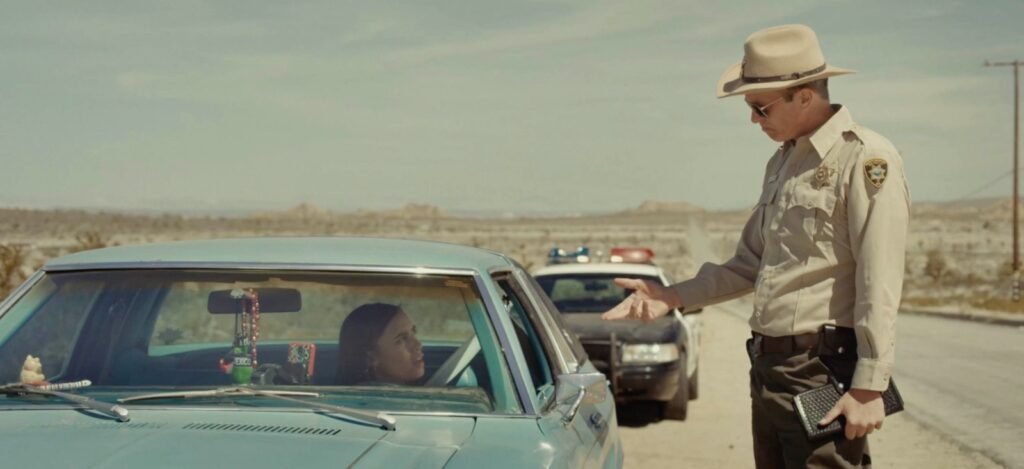
The desert setting allowed the film to function as a desert survival thriller — vast, exposed, and indifferent. A place where help does not arrive and authority can become predatory. The environment itself becomes complicit in the threat.
Survival horror works best when the rules are simple:
- One protagonist
- One threat
- One environment
- No easy exits
This clarity allowed Blood Star to operate simultaneously as a dark psychological thriller horror movie and a disturbing crime horror film, where fear exists both externally and internally.
The audience doesn’t just fear what the killer might do — they fear what prolonged exposure to him might do to the protagonist.
Survival Thriller Movie Influences That Shaped Blood Star
The lineage was unmistakable:
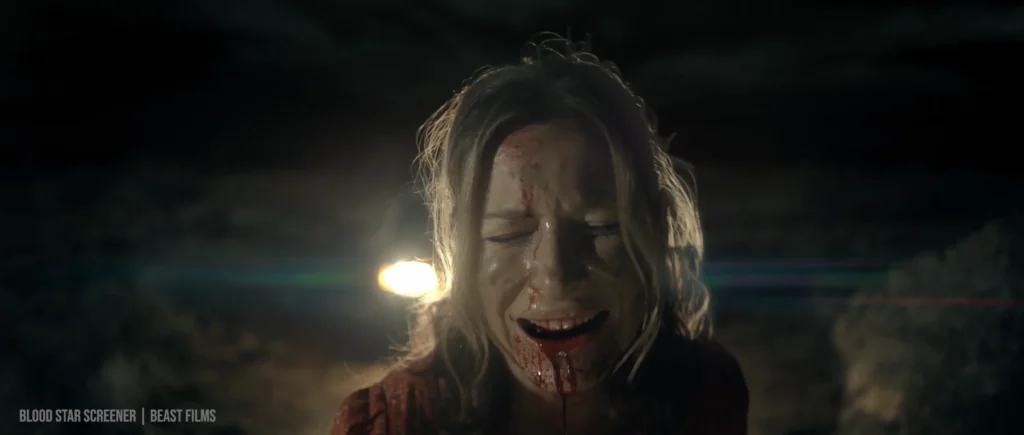
- The Texas Chainsaw Massacre — daylight terror & moral rot
- Duel — pursuit stripped to its essence
- The Hitcher — nihilism on open roads
- No Country for Old Men — violence without explanation
- Blood Simple — consequence over spectacle
- Death Proof — control, tension, inevitability
When we asked ourselves what kind of film Blood Star really was, we didn’t look to trends. We looked to films that had survived cultural time.
These films prove that survival thriller movies and serial killer road trip movies endure because they operate on the oldest storytelling mechanics we have: fear, pursuit, consequence.
If you love horror movies like Wolf Creek or thriller movies like No Country for Old Men, you understand that restraint is not a limitation — it’s a weapon.
That was our guiding principle.
Why We Believed the Film Could Reach a Wide Audience
Before committing to production, we tested the idea mercilessly.
We asked:
Will audiences connect with the hero?
Will they fear the antagonist?
Will the tension sustain without excess?
Will the story remain unpredictable?
If the answer had been no, we would have walked away.
What convinced us was not ego — it was audience behaviour. People actively search for:
- serial killer movies
- survival horror movies
- survival thriller movies
- road trip movies
- psychological thrillers
These genres are evergreen because they speak to something primal. Blood Star doesn’t reinvent them — it commits to them. And commitment, when done honestly, is what audiences respond to.
Festival screenings confirmed that instinct. People leaned forward. They gasped. They jumped. And crucially — they stayed.
The Risk of Making a Low-Budget Independent Survival Thriller
Shooting a first feature is always a risk. Shooting one in ten days, in the desert, magnifies that risk exponentially.
But the real danger wasn’t production failure.
It was audience indifference.
Audiences do not care how difficult a film was to make. They don’t care about budget, sacrifice, or logistics. They care about characters. They care about tension. They care about payoff.
A low budget survival thriller only works when restraint becomes a strength — when pressure replaces spectacle and discipline replaces excess. As an independent survival horror film, Blood Star had no margin for indulgence. Every scene had to earn its place.
How Theme Creates a Visual Hook in a Serial Killer Road Trip Survival Horror Movie
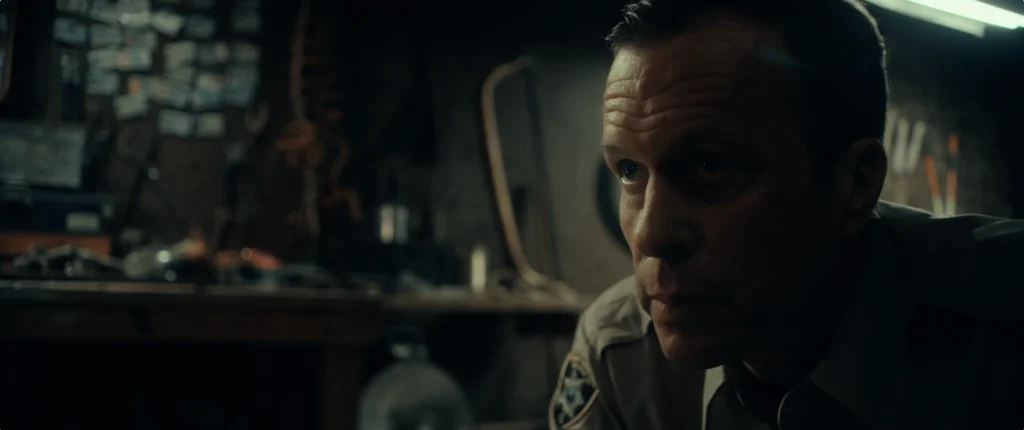
Blood Star (2025)
Logline: A young woman’s desert road trip turns into a relentless fight for survival when she becomes the target of a sadistic serial killer, forcing her to endure prolonged proximity to a predator with nowhere left to hide.
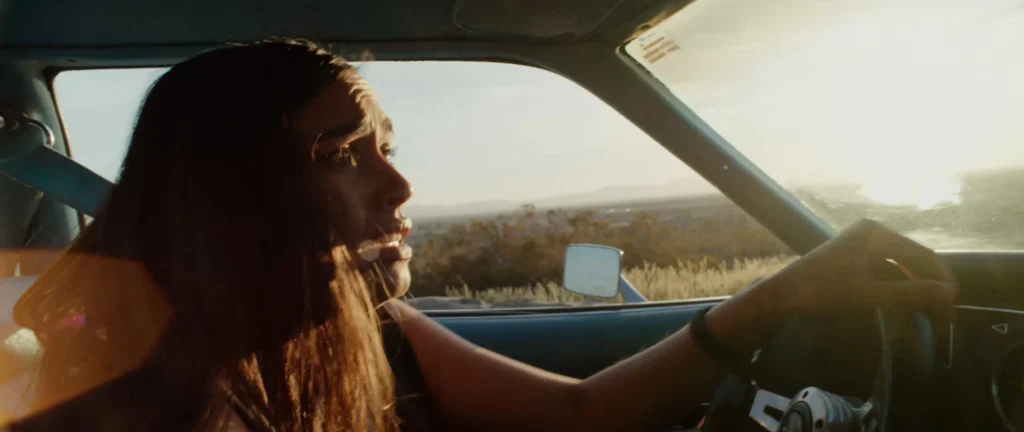
Visual hook: A lone woman trapped on an endless desert highway, pursued and contained by a single, ever-present threat — vast open space rendered claustrophobic.
Theme: Exposure, endurance, and the slow erosion of agency under unchecked power.
Theme visualised: Psychological entrapment is externalised through geography and movement — the open road, the car, and the desert strip away protection and witnesses, turning space itself into a mechanism of control and forcing the audience to experience fear as sustained pressure rather than sudden shock.
One of the most important decisions we made early on was not just what Blood Star was about, but how that meaning would be expressed cinematically. Theme, for us, wasn’t something to layer on top of the story after the fact. It was the framework that generated the film’s central metaphor and, crucially, its visual hook — a principle that shaped Blood Star as a serial killer movie, a road trip movie, and a survival horror movie all at once.
The clearest way to explain this approach is to look at a recent genre film that does this exceptionally well: Together (2024).
Together starts with a familiar emotional problem — a young couple paralysed by doubt about commitment, intimacy, and the loss of individual identity. Instead of treating that fear as subtext, the film literalises it. After drinking water from a cave, the couple begin to physically fuse together. The metaphor isn’t implied; it’s embodied. The theme is fear of commitment and loss of self, and it’s visualised through the grotesque, inescapable fusion of two human bodies into one organism. Emotional anxiety becomes physical horror. The visual hook is the theme.
That framework was central to how we approached Blood Star.
We asked ourselves: what is the core fear driving this story, and how can that fear be expressed visually, not verbally? In our case, the film is about exposure, endurance, and the terror of being trapped in proximity to something predatory with no authority left to appeal to — the defining tension of a serial killer survival horror movie. The metaphor isn’t abstract. It’s spatial and physical. The open road, the car, the desert — these aren’t backdrops. They are mechanisms. Movement becomes vulnerability. Distance becomes danger. As a road trip movie, the journey doesn’t offer freedom; it strips it away. The killer doesn’t just pursue the protagonist; he occupies her world.
By grounding theme in physical experience, the film’s visual language becomes inseparable from its meaning. The audience doesn’t just understand the fear — they inhabit it. That’s the difference between theme as decoration and theme as engine. When done properly, theme doesn’t explain the film. It creates it.
We never expected to see the film in theatres.
Then suddenly we were sitting with 200 strangers — all free to walk out, all free to judge. When people pay for a ticket to watch a movie, it stops being yours. It belongs to them. That is the greatest pressure a filmmaker can feel — not the pressure of production, but the pressure of audience indifference.
That is the ultimate test of a psychological thriller: finding out, in real time, whether it holds.
People jumped out of their seats.
They held their breath through the tension.
They thought they knew what was coming.
But no one predicted where the danger would come from — or how it would play out in the end.
When the final turn landed, the reaction was physical: relief, cheers, genuine applause. That moment mattered more than any press quote or review, because those strangers didn’t care how the film was made. Audiences don’t care how hard a film was to make. They don’t care how little money you had. They don’t care how many favours were called in.
They only cared about how it made them feel. That’s storytelling at its oldest level — the same reason humans once sat around campfires listening to stories unfold.
Why We Took the Risk
We didn’t make Blood Star chasing prestige.
We didn’t make it following trends.
We made it because we believed a serial killer horror thriller movie, grounded in the DNA of the best road trip movies and the discipline of the best survival thriller movies with a killer, could still cut through the noise.
And when reviewers like MovieMaker Magazine, describe moments as “Tarantinoesque,” or audiences tell us it’s the best film they saw at a festival, that validation doesn’t feel like hype — it feels like connection.
That connection is why filmmakers take risks.
It’s why we did this.
And it’s why Blood Star exists.
The Only Thing Independent Films Actually Need: An Audience
Independent films don’t disappear because they’re bad.
They disappear because they’re unseen.
In a landscape flooded with content backed by PR budgets, advertising spend, and algorithmic privilege, independent films don’t rise to the top by default — no matter how strong the work is. Quality alone isn’t enough when visibility is bought, boosted, and engineered.
Independent filmmakers don’t survive on platforms, downloads, or algorithms. We survive on people watching the film.
How you watch doesn’t matter.
On a streaming platform, through a friend’s login, on a pirate download link, or cracked firestick — the reality is that independent filmmakers rarely see meaningful money from those sales routes anyway. That isn’t bitterness. It’s just how the system works, it’s stacked against the independent filmmaker.
What matters most to all independent filmmakers, is that the film is seen.
That the story reaches someone.
That it’s passed on.
If Blood Star stayed with you after the credits, don’t let it end there. A rating, a review, or even a short reaction on IMDb, Letterboxd, Rotten Tomatoes — or wherever you talk about films — is how independent films continue to exist. Filmmakers need the audience more than ever, and it’s the audience — not algorithms or budgets — that ultimately decides whether independent cinema survives.